Patterns of the Month: ChinoiserieEach month we feature a new pattern from our Pattern and Source Print Database and archive them on these pages by category. |
||||||||||||||||
(Click on thumbnails to
see larger images)  |
Chinese Phoenix Shown is an Enoch Wood & Sons (1818-1846) 9 inch plate named “Chinese Phoenix” by the TCC. The dark blue color indicates that the pattern was made for the American Market. Visit more information and other archived patterns to learn more about this pattern. Members only: for more information about this pattern and to see other similar patterns, search the Pattern and Source Print Database. |
 |
||||||||||||||
(Click on thumbnails to
see larger images)  |
Geese with Peonies and Feathers Shown is a 10.75 inch plate known as Geese with Peonies and Feathers. It was made by G.M. & C.J. Mason (1813-1826). The pattern is #11719 in the TCC Database of Patterns and Sources. Visit more information and other archived patterns to learn more about this pattern. Members only: for more information about this pattern and to see other similar patterns, search the Pattern and Source Print Database. |
 |
||||||||||||||
 |
Chinese Dragon Shown is a 9.25 inch soup plate printed in blue with a Chinese dragon. A pseudo Chinese mark is printed on the back. The pattern is based on a Chinese original design. Members only: for more information about this pattern and to see other similar patterns, search the Pattern and Source Print Database. |
 |
||||||||||||||
 |
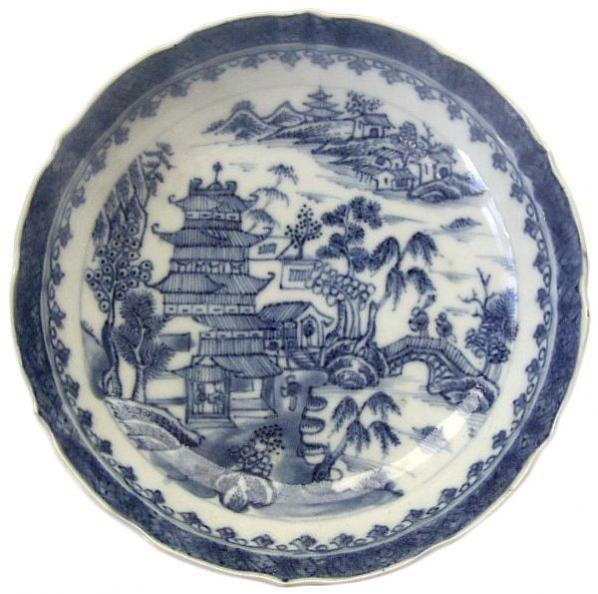
Dagger Border Class V Shown is an earthenware 8 inch plate in the pattern known as "Dagger Border Class V." It was made by Wood & Caldwell (1790-1818), and is based on a Chinese hand-painted porcelain original. left: Wood & Caldwell 8 inch plate in the Dagger Border Class V pattern Members only: for more information about this pattern and to see other similar patterns, search the Pattern and Source Print Database. |
 |
||||||||||||||
 | BROSELEY DRAGON Shown is an 8.5 inch dessert plate in the Broseley Dragon pattern; ca. 1800-1805. It was made by the Coalport Porcelain Works (John Rose & Co.) 1795 to the present. Members only: for more information about this pattern and to see other similar patterns, search the Pattern and Source Print Database. |
|||||||||||||||
 | "Lange Lijsen, Jumping Boy, or Long Eliza pattern"
The 4 inch miniature plate seen here is a Chinese hand-painted pattern with a simple version of the Lon Members only: for more information about this pattern and to see other similar patterns, search the Pattern and Source Print Database. |
|||||||||||||||
 | "Buffalo"
|
|||||||||||||||
| "The Apothecary"
|
|||||||||||||||
 | "New Hall Chinoiserie saucer" Shown is a Chinoiserie pattern on a 5.75 inch saucer that was made by New Hall (1782-1835). It is printed on porcelain with a charmingly naive pattern that includes a large lion among chinamen and pagodas! To see similarly decorated patterns, search "Chinoiserie / Printed Patterns on Porcelain with Color Added" in the Pattern and Source Print Database. |
|||||||||||||||
 | "Fisherman," possibly by Minton (1793-1872), is found on a 9.25 inch plate. The pattern dates from around 1805. For more information about this pattern, see Fisherman - Minton in the Pattern and Source Print Database. | |||||||||||||||
| Willow Nankin Saucer, 5 inches. A Caughley (1775-1779) porcelain Willow Nankin pattern that is copied almost exactly from the Chinese original, which is known as Two Birds. To learn more about this early Willow pattern, see Willow Nankin in the database. |
|||||||||||||||
.jpg) |
"Chinese Market Stall." Maker Unknown. This pattern is shown on a pearlware well and tree platter measuring 13 5/8” by 18 1/4” and is printed in underglaze blue with overglaze clobbering in shades of rust red and ochre enameling on the edge. The added coloring is unusual on a pattern of this type. Found on the back is an impressed “18” mark indicating the size of the dish and a blue hand painted “X” printer's mark. The border incorporates geometric shapes and picture medallions. Examples are known both with and without the name 'Wear Sc.' at the end of a fence in the design. [Not present on this piece.] The pattern is frequently attributed to Andrew Stevenson of Cobridge, Staffordshire, on the grounds of its resemblance to other marked similar patterns. This pattern can be found the TCC Pattern and Source Print Database. |
|||||||||||||||
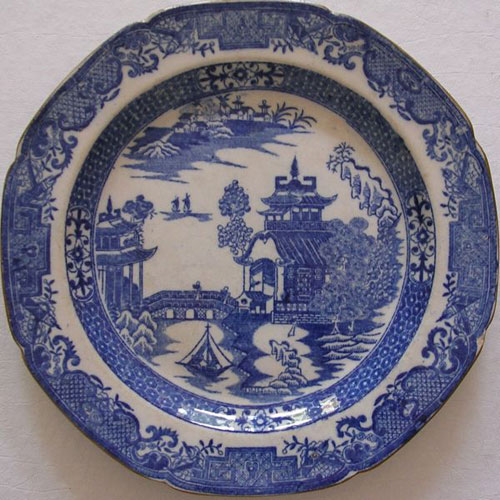 |
Long Bridge pattern 9.50" pearlware blue-printed plate impressed mark: SWANSEA c. 1800-10 Pattern was also made by many other potteries. |
|||||||||||||||
See other Patterns of the Month by category:
|
||||||||||||||||